Launched in the French city of Nantes in 1826, the world’s first public bus system may have promised convenience but not much comfort. Named after the Latin ‘for all’, these early omnibuses had cushion-less seats and were pulled by horses over bottom-bruising cobbled streets. Should one of their passengers have travelled forwards through time rather than around the city’s roads they would be astonished by today’s electric, flash-charging city buses, with their wheelchair-friendly dipping ramps, or the long-distance coaches that roll smoothly across the continent’s motorways with wifi, usb chargers and leather-covered seats; bus travel has come a very long way in the last 200 years.
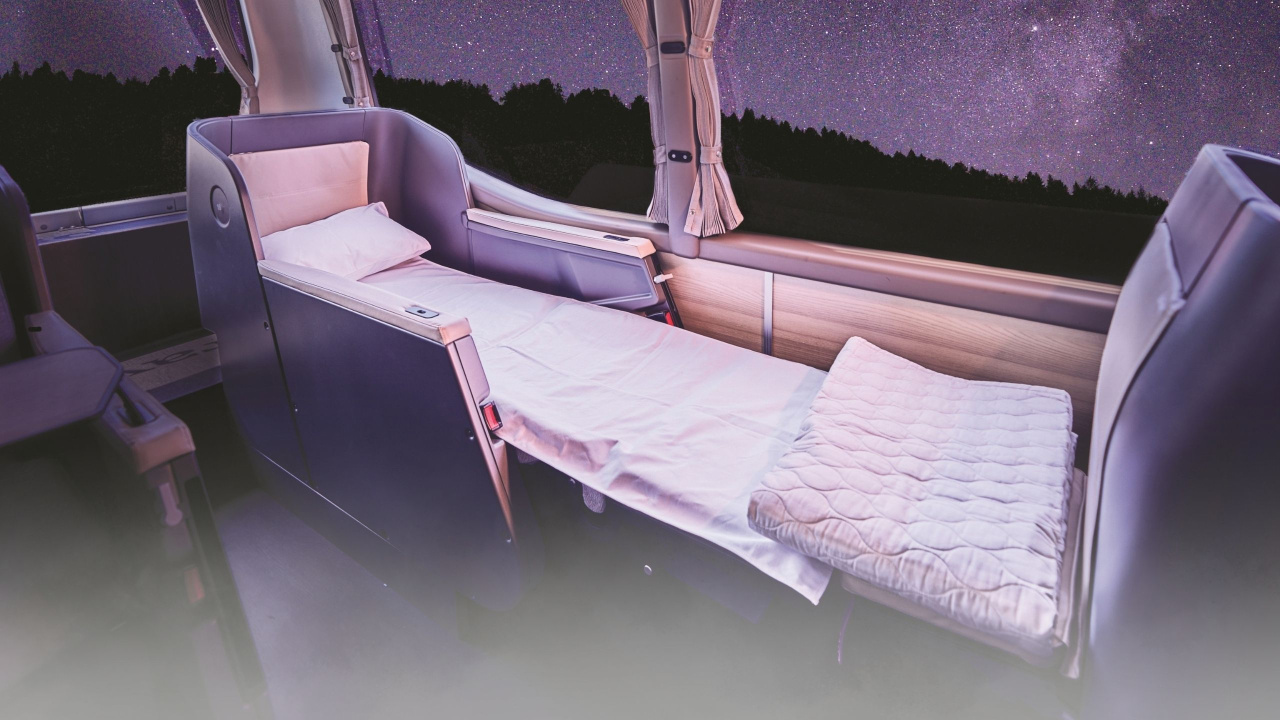
Last November it made one of its biggest leaps yet when Swiss start-up Twiliner launched a trio of hi-tech sleeper buses. Designed to mitigate against climate change by luring travellers away from carbon-intensive flights, and offering an alternative to a growing but limited night train network, Twiliner’s USP is seats that convert into fully flat beds at the press of a button. The first of their kind in Europe, the buses now run several times a week between Amsterdam and Zurich (an 8pm to 8.15am journey via Rotterdam, Brussels, Luxembourg and Basel), and Barcelona and Zurich (7.30pm to 9.45am via Bern and Girona) with plans to add 23 more routes by 2028 with Rome, Cannes and San Sebastian on the list so far. A charter option also offers private hire.
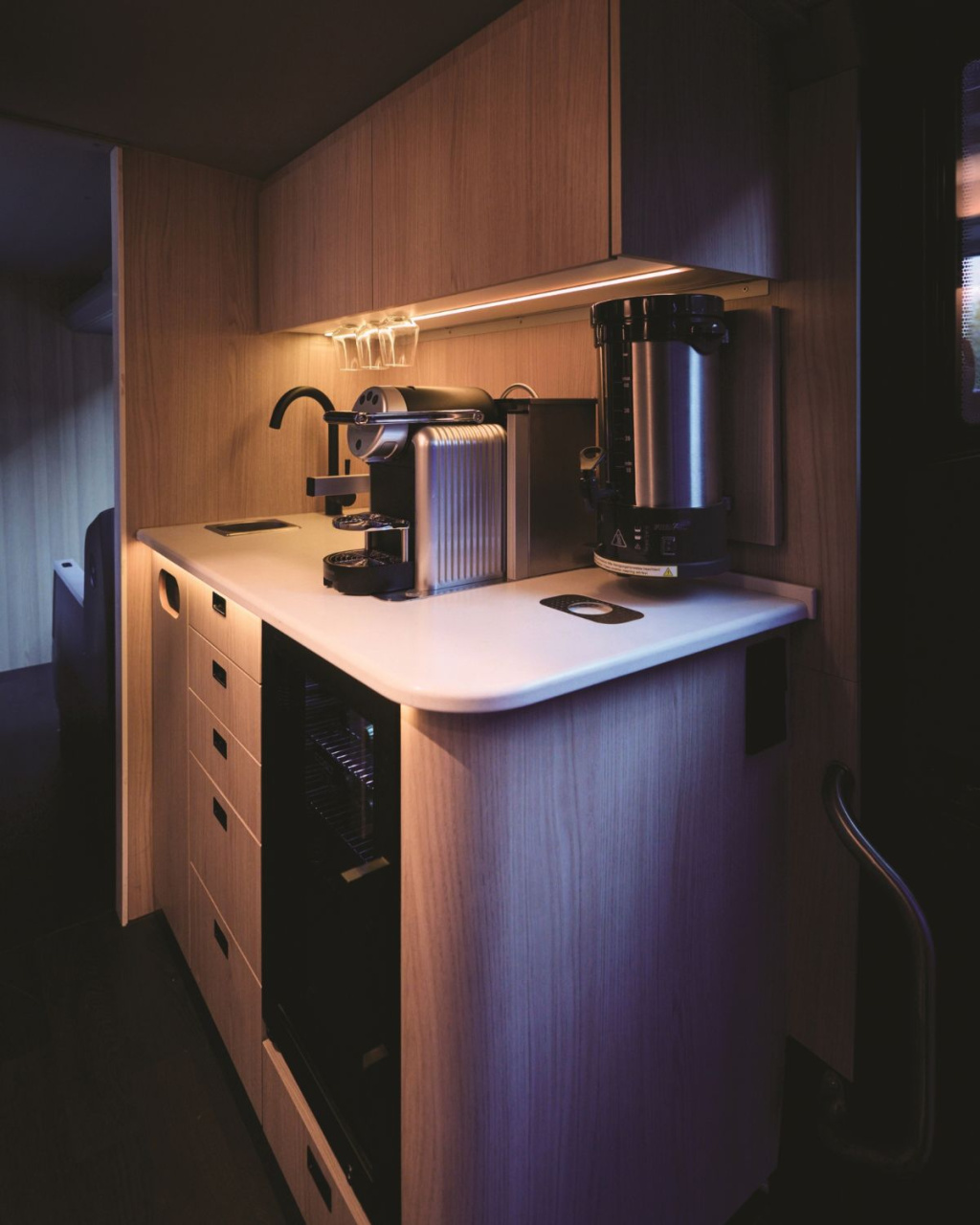
Keen to test the service out, I climbed aboard one of Twiliner’s purple-hued buses at Amsterdam’s Sloterdijk bus station. If the outside was reminiscent of a colossal deep sea creature swimming languidly through the evening dark, the peachy glow that spilled from its opening door spoke more of the Starship Enterprise. Stepping into that light, I found three seats downstairs plus a roomy toilet, a changing room and a small run of shelves selling eye masks, toothbrushes and snacks. Past the round-edged snack bar and up some smoothly curving steps, I located my seat among one of 18 on the upper deck. As we rolled out of Amsterdam (on time – this is a Swiss service after all) I sat back to take in the design.
Zurich agency distylerie created Twiliner’s branding – a fluid style that underscores the smoothness of the ride. A colour palette that swims from deep indigo through blush and apricot to pale gold reflects the service’s dusk departures and dawn arrivals, and appears on everything from livery to tickets.
If the layout and feel is similar to that of a business class cabin on a premium airline, it’s with reason. Twiliner co-founder and product designer Joël Béla Bourgeois explained that, while the buses were built by Catalan coachmakers Ayats, the seats were manufactured by UK-based Airline Services Interiors. “Stylistically, we broke away from the dark and bulky designs typical in the industry. Instead, we embraced a warm, Nordic aesthetic: soft-touch surfaces, natural wood tones and calming – grey-beige shades to create visual harmony. We weren’t aiming to build a ‘luxury’ bus. The goal was to create a compact but complete travel environment, like a rolling boutique hotel.”
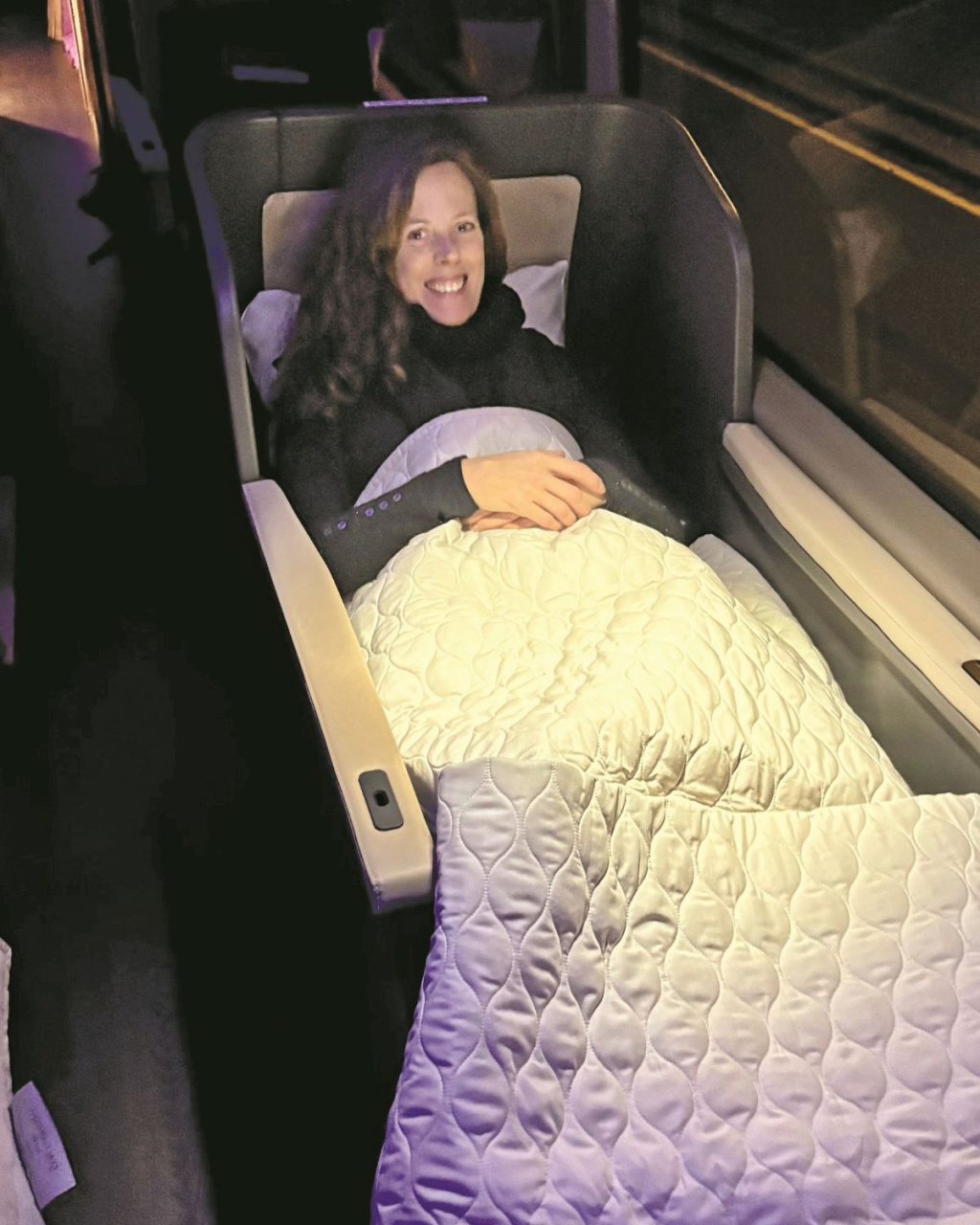
Sustainability was a big factor in choosing materials: the bus’ shells are made from Boltaron recycled aviation-grade plastic; their upholstery is made from circular e-leather and sustainable fabrics; their aluminium and steel frames are mostly screwed, rather than glued, for potential second-life use; and lightweight paneling was chosen to reduce fuel consumption. This attention to detail extends to amenities. On my seat was a soft tote bag packed with sheets, pillows, pillowcases and blankets custom-made using Oeko Tex 100 materials by Zurich-based textile company Skin Euphoria. The idea is that travellers can make up their own beds when they’re ready to sleep and, by 10pm, I was. Scanning a QR code gave me instructions for my bed but, really, it was as simple as pushing the right button then lying back as my seat reclined. Stretched out on the plump mattress a few moment later, the only difference to lying on any other bed was that, here, my lower legs were slipped into a mesh bag which was then clipped into seatbelt-style buckles on either side of the seat. This is arguably the most critical element of the Twiliner design, and the reason such buses –long popular in Asia and South America – haven’t existed in Europe before now. Mindful of the danger that, should a bus crash, buses with flat beds have never previously met rigorous European safety regulations. Twiliner, however, began life as a research project, supported by the Migros Pioneer Fund and working with road safety specialists TÜV, allowing the company time to win safety approval with their patent-pending restraint system.
Duly clipped in, by 10.30pm I was fast asleep, lulled by the gentle motion of the coach as it trundled its way through the French countryside. Staying in that state for the next seven hours, I woke at dawn to daylight rising over the Jura mountains. Rolling into Zurich’s Sihlquai bus station, having spruced up in the bus’ changing room and helped myself to a freshly brewed espresso from the on-board machine, I felt rested and ready to face the day in a way those early omnibus travellers could surely only have dreamt of.
Rhiannon Batten travelled as a guest of Twiliner. Tickets between Amsterdam and Zurich cost from CHF150/€164 twiliner.com
Twiliner has partnered with 25hours Hotels; passengers can book an add-on ‘arrival package’ (CHF35/€38) giving them access to breakfast, a shower and use of the hotel’s wellness area when they arrive in Zurich. In addition, they get 10% discount on a stay at 25hours Hotel Zurich.
Iconic designs on public transport
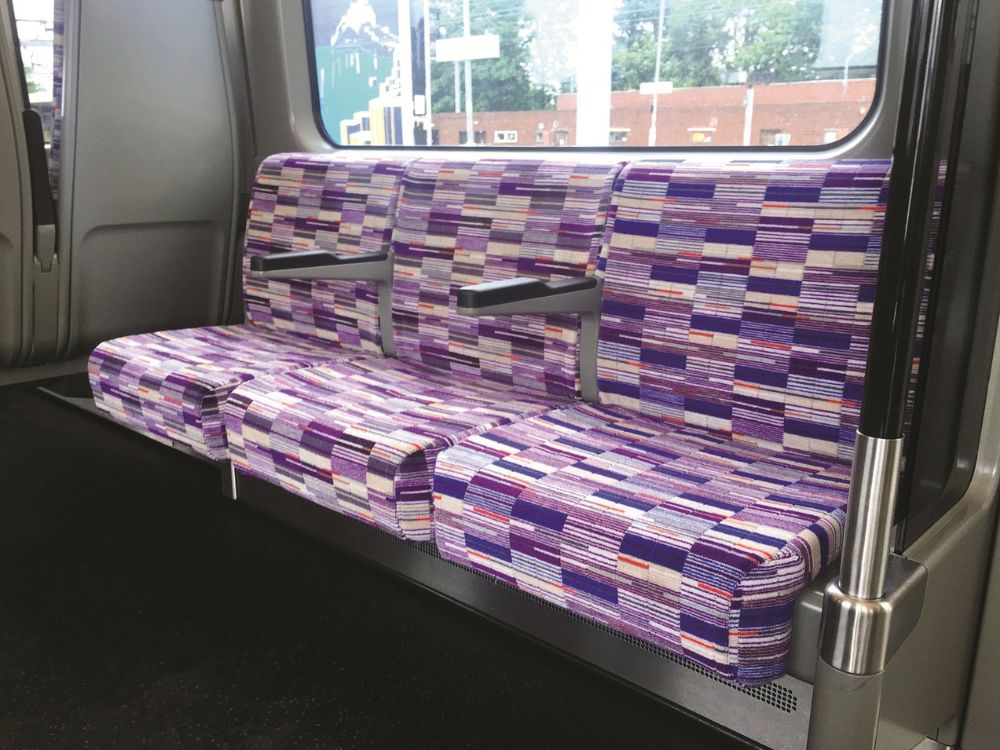
London
London’s Underground is famous for its moquettes – hard-wearing woven seat fabrics with geometric patterns. Launched in 2022, the purple-hued Elizabeth Line moquette was created by design studio Wallace Sewell, its motif was inspired by the architecture and speed of a ride along the route.
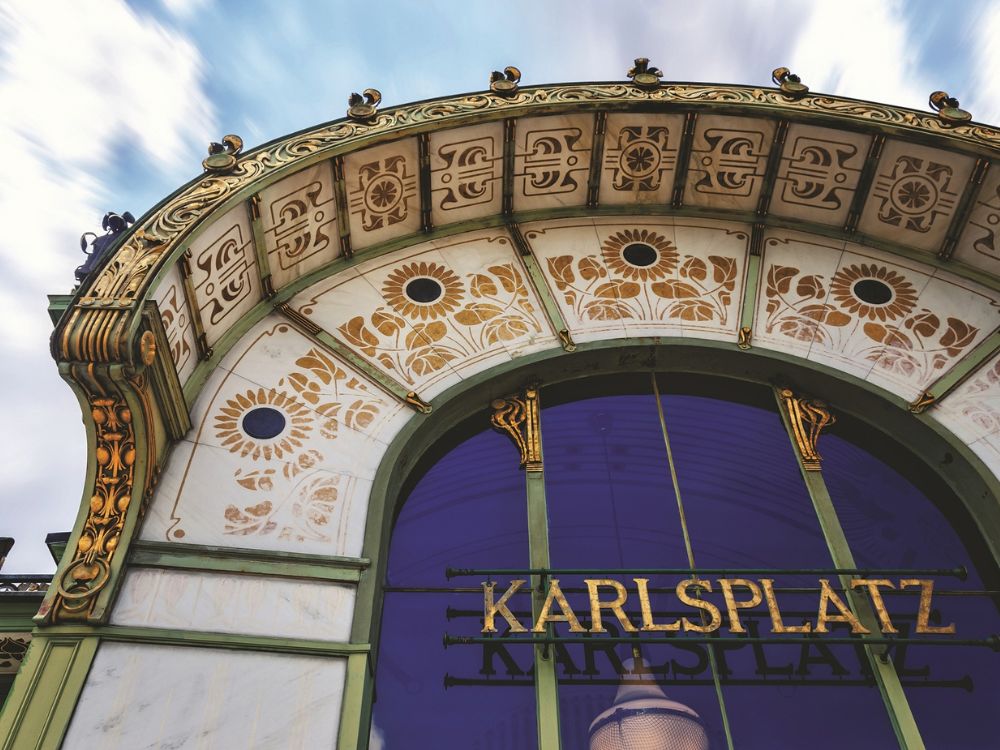
Vienna
When Art Nouveau architect Otto Wagner was commissioned as artistic director of the Vienna metropolitan railway system in the 1890s he took a holistic approach, designing everything from stations to small brass lights which ran down the ceilings of train carriages. His lights are still in production today.

Milan
Milan’s city’s metro system was designed in the 1960s by Italian architects Franco Albini and Franca Helg, in collaboration with designers Antonio Piva and Bob Noorda. Like the system’s P-shaped handrails, and customised Helvetica signage, the wavy plastic seats are much treasured.
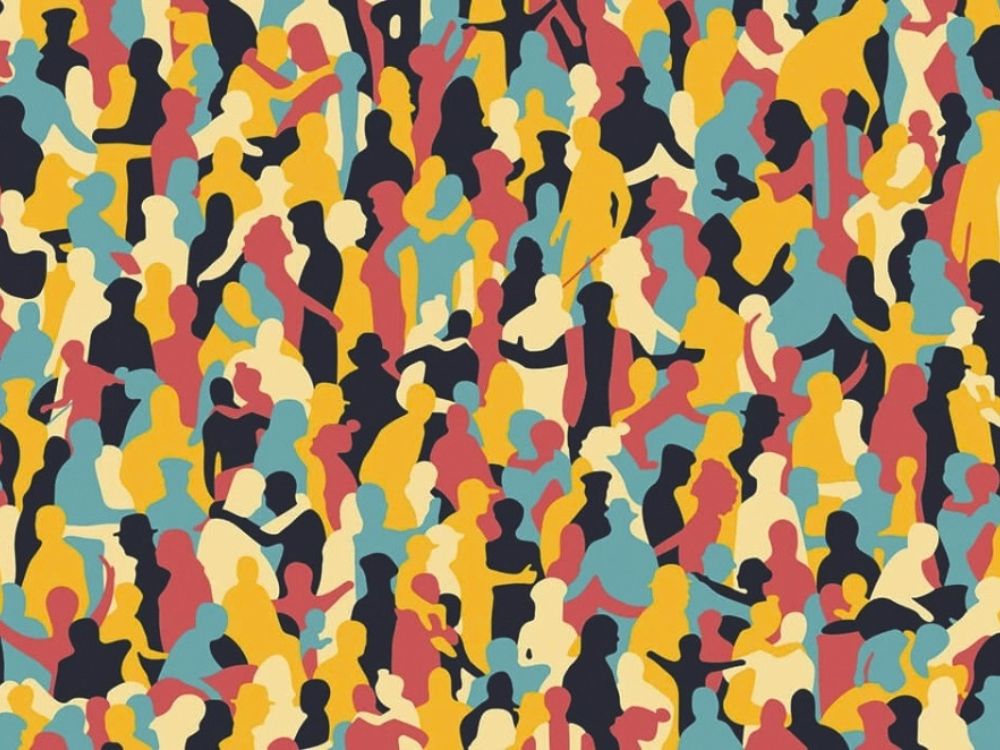
Berlin
Currently being rolled out on buses and trains across the Berliner Verkehrsbetriebe network, the Vielfalt or ‘diversity’ seat fabric design weaves together the yellow, blue, red and black silhouettes of 80 different Berliners, reflecting all ages, genders, sexual orientations and cultural backgrounds.
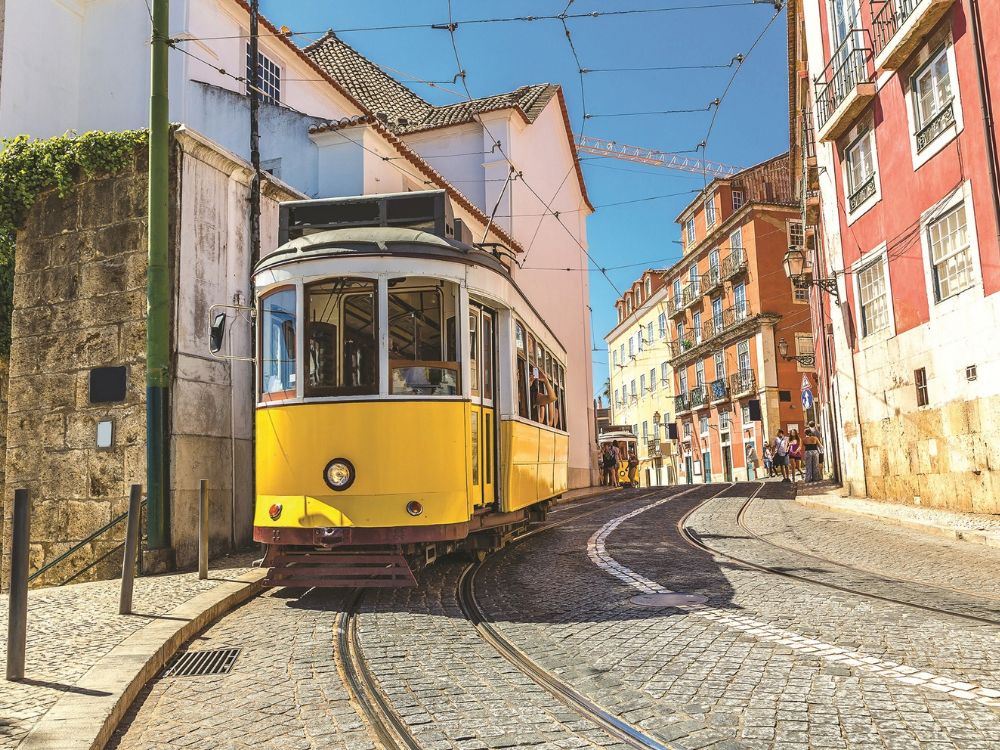
Lisbon
Lisbon’s yellow and white remodelado trams date back to the 1930s (albeit now adapted to meet modern safety standards). Designed to navigate the city’s steep slopes, the trams were first introduced around 1914 and are known for their vintage wooden carriages and iconic bells.