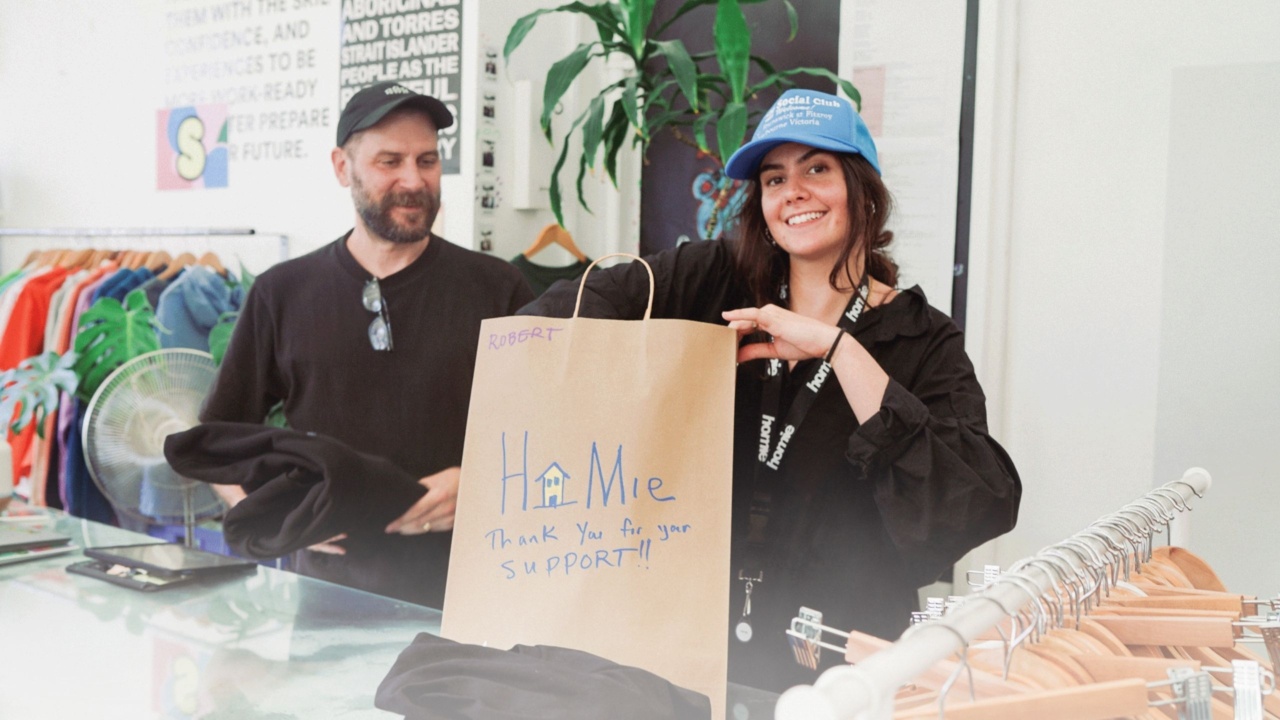

“It began with trying to break down the stigma associated with homelessness and create awareness of the issue. It then evolved into a pop-up store. I met my co-founders through charity bike rides and volunteering overseas. We were young, passionate, and wanted to do something real. That one-month pop-up has now grown into a decade long project”. Marcus Crook is the co-founder and creative director of HoMie in Melbourne, a streetwear store, which, as you may have gathered from his opening gambit, has a bit of a twist in its business plan.
‘HoMie started with purpose first and then grew into a brand second’
In this era of latter-day capitalism, it’s begrudgingly understandable, even sense-making, that businesses exist in order to make money for their owners, maybe with a touch of philanthropy for good show, but this is where HoMie diverts from the beaten track. This Melbourne-based streetwear label is also a social enterprise —not sponsoring, not donating, but very literally putting its money where its figurative mouth is. One hundred percent of HoMie’s profits go towards achieving its mission: to support young people affected by homelessness or hardship. “HoMie started with purpose first and then grew into a brand second. We quickly realised there was an opportunity to make clothing mean something more. Profit was never the driver. Impact and awareness were,” Marcus continues. But surely having to make a living, and achieving growth, has to come into it somewhere? “As we progressed, we realised you can’t be a purposeful business without profit. That really shifted my mindset to focus on making as much money as possible so our impact team can do their thing,” he answers. Some of their initiatives and enterprises include an accredited retail education and employment programme for young people (aged 18 to 25) affected by homelessness or hardship running alongside a 10-week work experience programme. “Paid retail training and education, mentoring, and real work experience… and young people are paid for every single minute,” says Marcus. VIP Days, where young people are welcomed into the store to shop for free HoMie garments, haircuts, beauty services, personal care packs, and lunch (have a look on their Instagram page, they look like joyous events); and a community group which creates opportunities for the graduates of the HoMie Pathway Alliance, with an Alumni job club, and special social events. Can Marcus pick a favourite from such an auspicious line-up? “It’s hard to separate the three impact programs, but our most in-depth is the Pathway Alliance,” he tells me. “It’s practical, it’s hands-on, and it makes a big impact. Seeing young people go on to build their careers afterwards is pretty incredible.”

© Melissa Cowan
All these enterprises and initiatives sound like a huge investment of time and resources, which tells me that youth homelessness must be quite the issue to tackle in Australian cities. “It’s bigger than people think. More than 44,000 young people aged 15–24 are affected by homelessness in Australia each year,” Marcus tells me. “It’s not always visible, it’s couch surfing, temporary accommodation, unstable living. Melbourne, Sydney, Brisbane… all our major cities are impacted.”
According to a report from the University of New South Wales and Homelessness Australia at the end of 2024, 10,000 Australians are becoming homeless each month—a 22% increase in the past three years. This includes an uptick in people in employment coming in for housing help, including part-time teachers and nurses. It can be for many reasons, domestic violence, a generally unhappy home environment… but there is no denying that the Cost of Living Crisis is having a huge impact. Where governments and multinationals fail, it falls to groups like HoMie, who find themselves on the front line. But from bleakness comes hope—does Marcus have a favourite memory so far? “Graduation days from our Pathway Alliance program. Watching a young person walk out with confidence, a job, and a sense of direction… that’s better than any big campaign or runway moment. That said, we’ve also had some incredible partnerships with the AFL, Champion, and Mambo, plus multiple collections at Melbourne Fashion Festival and Melbourne Fashion Week.”
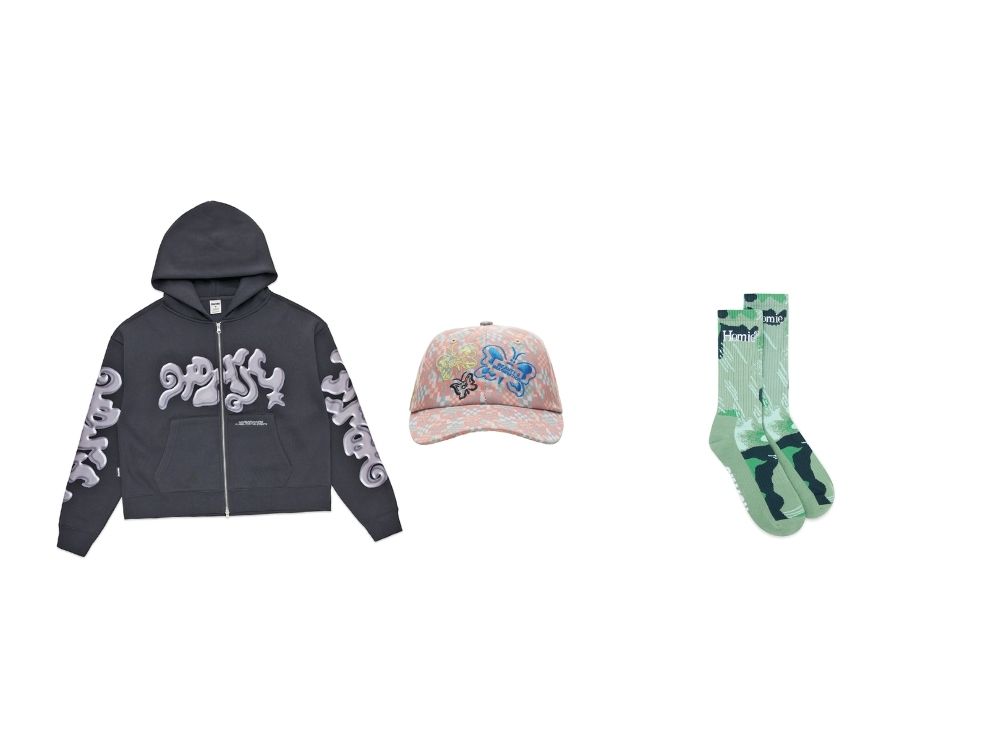
Ah yes—the small matter of the clothes. Edgy, high-quality skate fits with street-art designs, pops of colour, and a touch of European kookiness… all very Melbourne. It’s time to ask Marcus apparently the most taxing question—does he have a favourite item of clothing? “This is tough! My wardrobe has plenty of pieces from over the years. I’d say the staple heavyweight hoodies for cold winter days, plus knits and REBORN upcycled gear are my go to’s. We’re expanding the range even more this coming season, which is exciting.”
A lot to look forward to then…. But, with 3,900 (and counting) young people supported, 15,500 items of clothing gifted, over 20,000 hours of employment, and an employment retention rate of 85%, there is a lot to look back on and be proud of too. Here’s to another decade, at the end of which we can only hope there will be no more youth homelessness to fight.