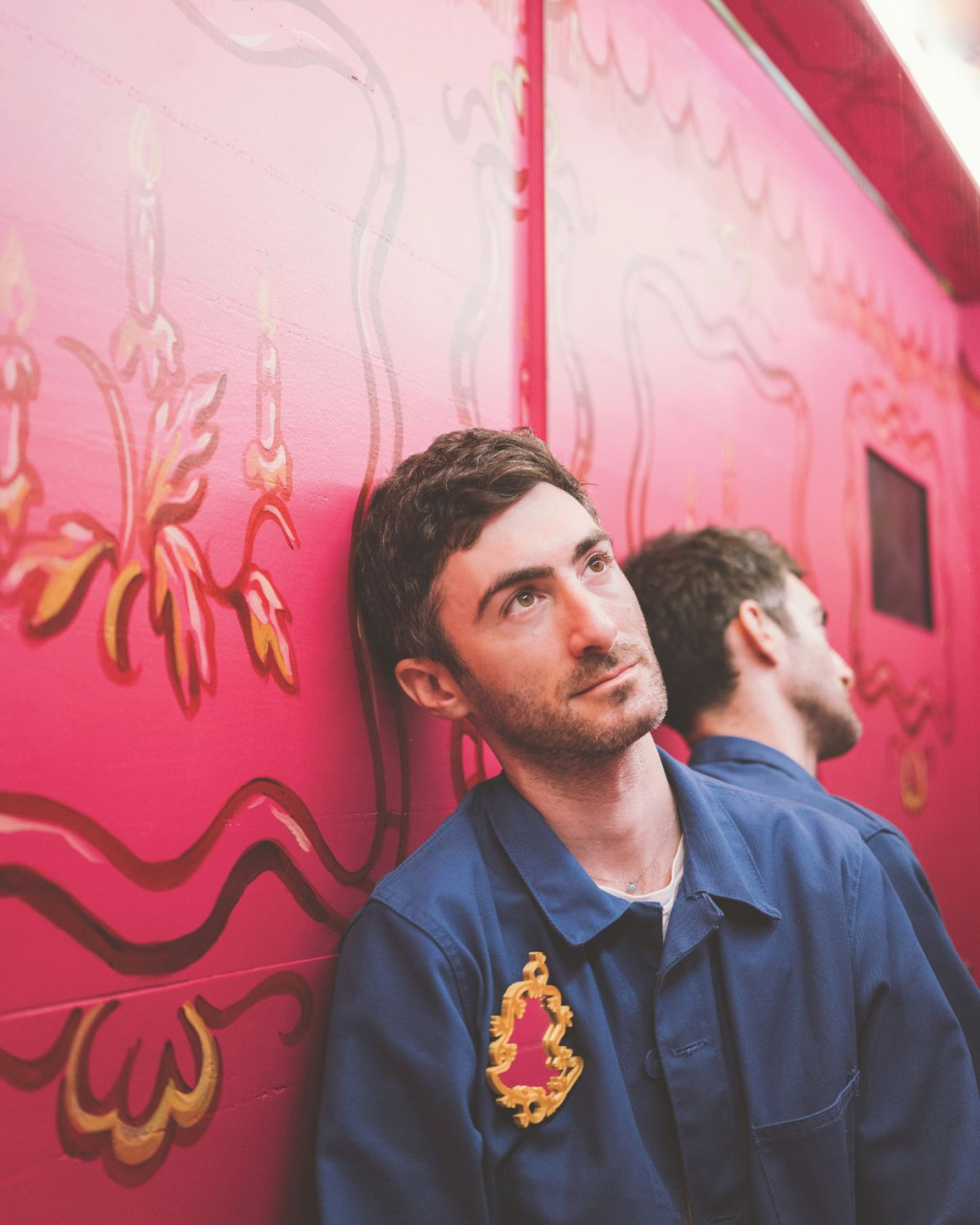
Tell me a bit about who you are.
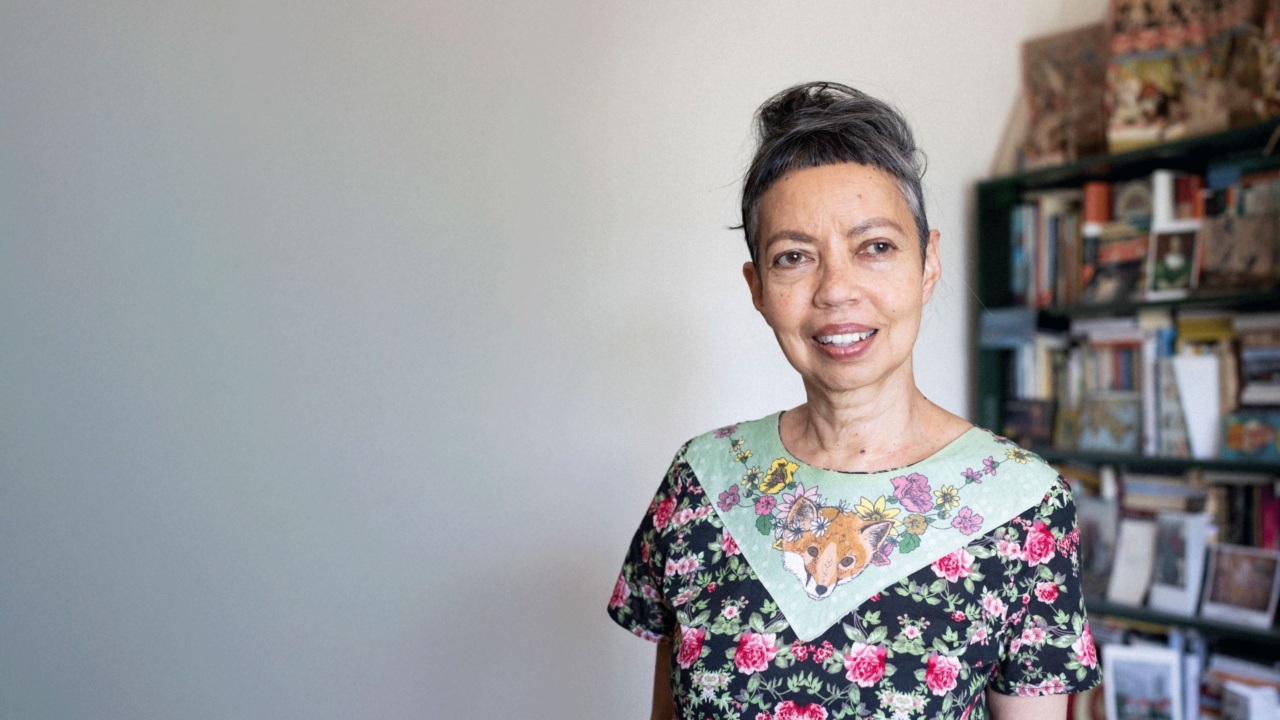
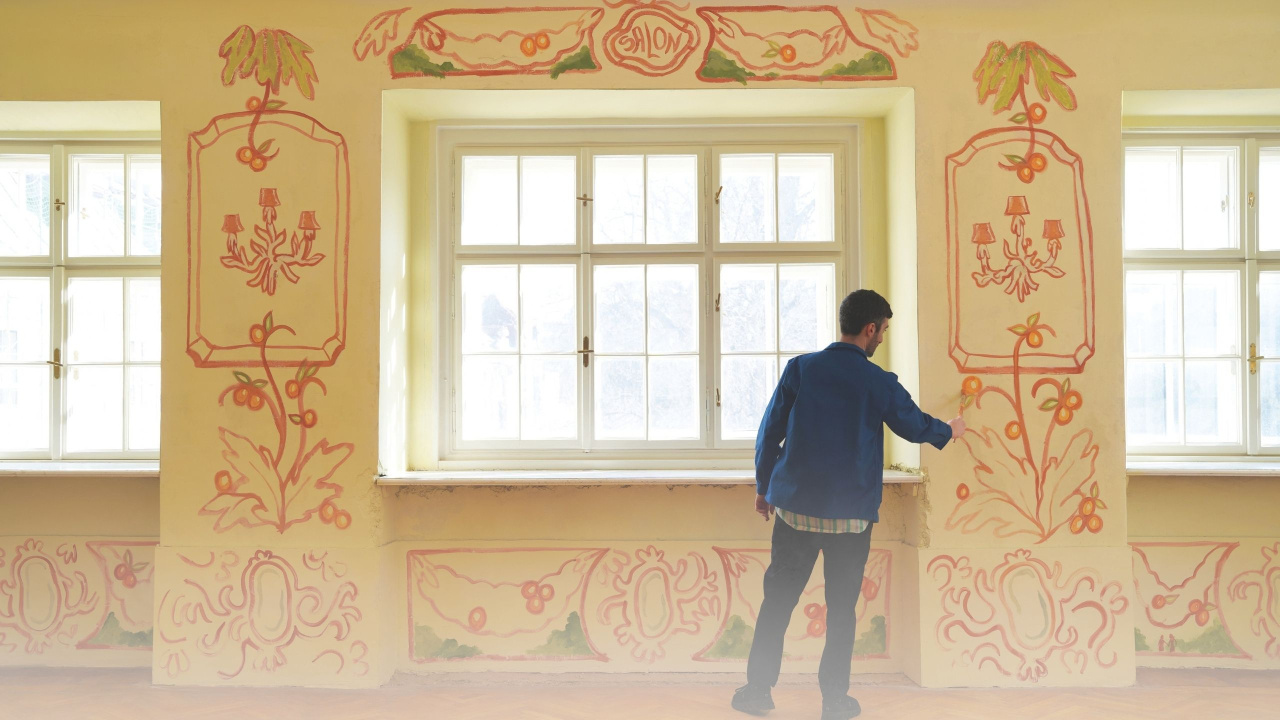
I’m a visual artist working across painting, textile, 3D printed sculptures and site-specific installation. My work is figurative and narrative-driven, often drawing from art history, theatre, fashion, and my own personal mythology. I’m mostly a storyteller, in all aspects of my work.
Where are you based?
I grew up in Manhattan, New York City, and have strong ties to Paris and Berlin, but Vienna has become home for the last 10 years. I love it for the culture, the architecture, the expansive history and the small village feel, despite being a capital.
How did you get into art?
Art was always the constant for me. I studied fine art, but the most pivotal thing for me was growing up a couple blocks away from the Metropolitan Museum of Art in New York. I would go there every week with my parents, but at that young age I didn’t realize that Tutankhamun and Manet were from different epochs. That mix shaped me. I never wanted art to live only on white walls. I’m interested in how it enters daily life, hospitality, interiors, and public space.
What or who are your biggest influences?
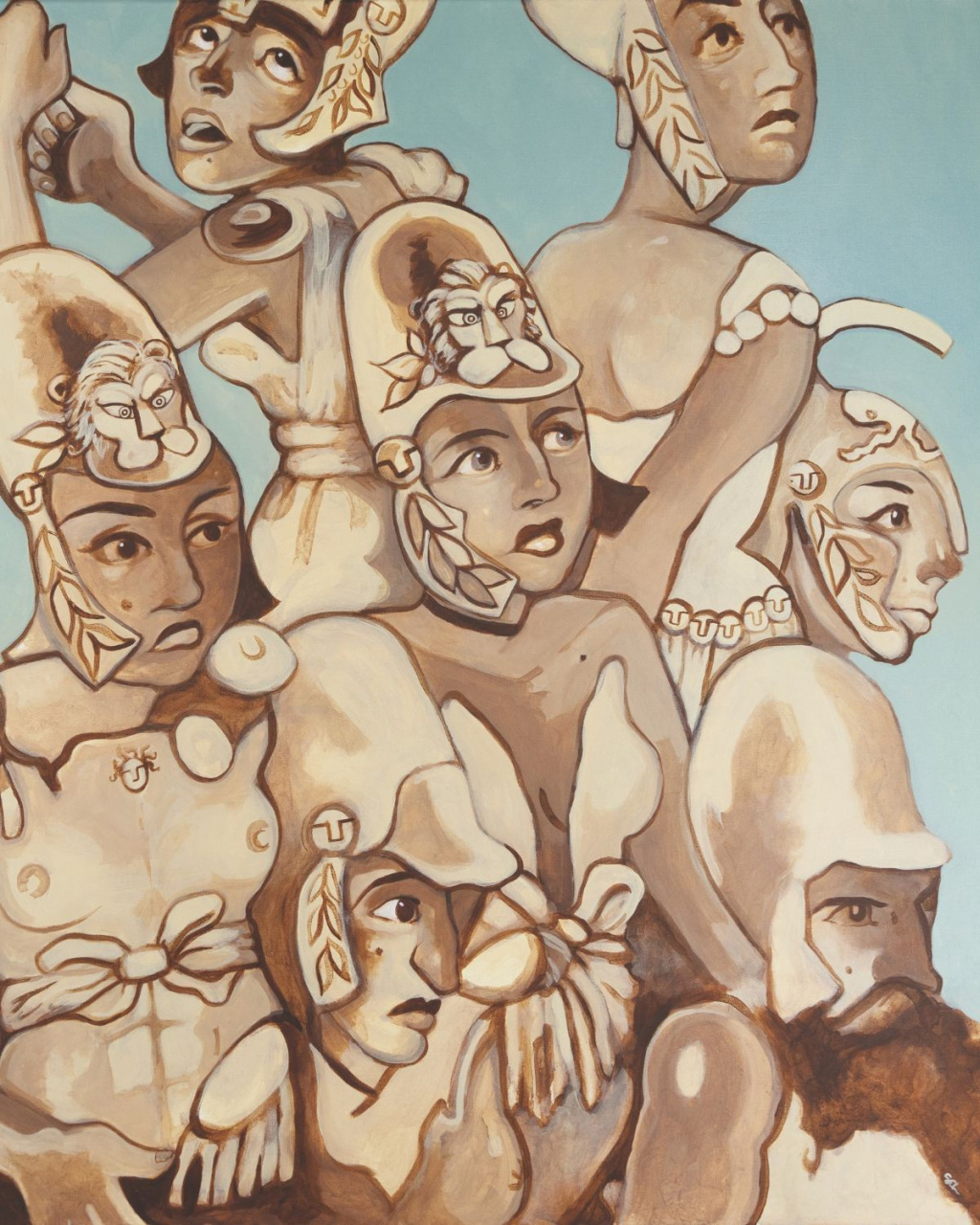
I’m deeply influenced by painters like Beckmann, Dix, Klimt, and Manet, artists who understood psychology, society, and theatre. And attending the School for Visual Arts in Manhattan in the early 2000s, I base a lot of my career ambitions off American artist John Currin and Takashi Murakami from Japan. Beyond that, fashion history, set design and opera. I’ve always adored Christian Dior and the notion of haute couture. I love creating everything bespoke, because I think we live in a world of way too much uniformity. I’m inspired by places that feel lived-in and layered, spaces with memory and humour rather than perfection. In my art there’s an irreverence of mixing of time periods together in visual language such as French circus in the 1890s with interwar Weimar Germany during the height of the expressionist painters. I love to see it all through my lens, mashing them all together.
Describe your work.
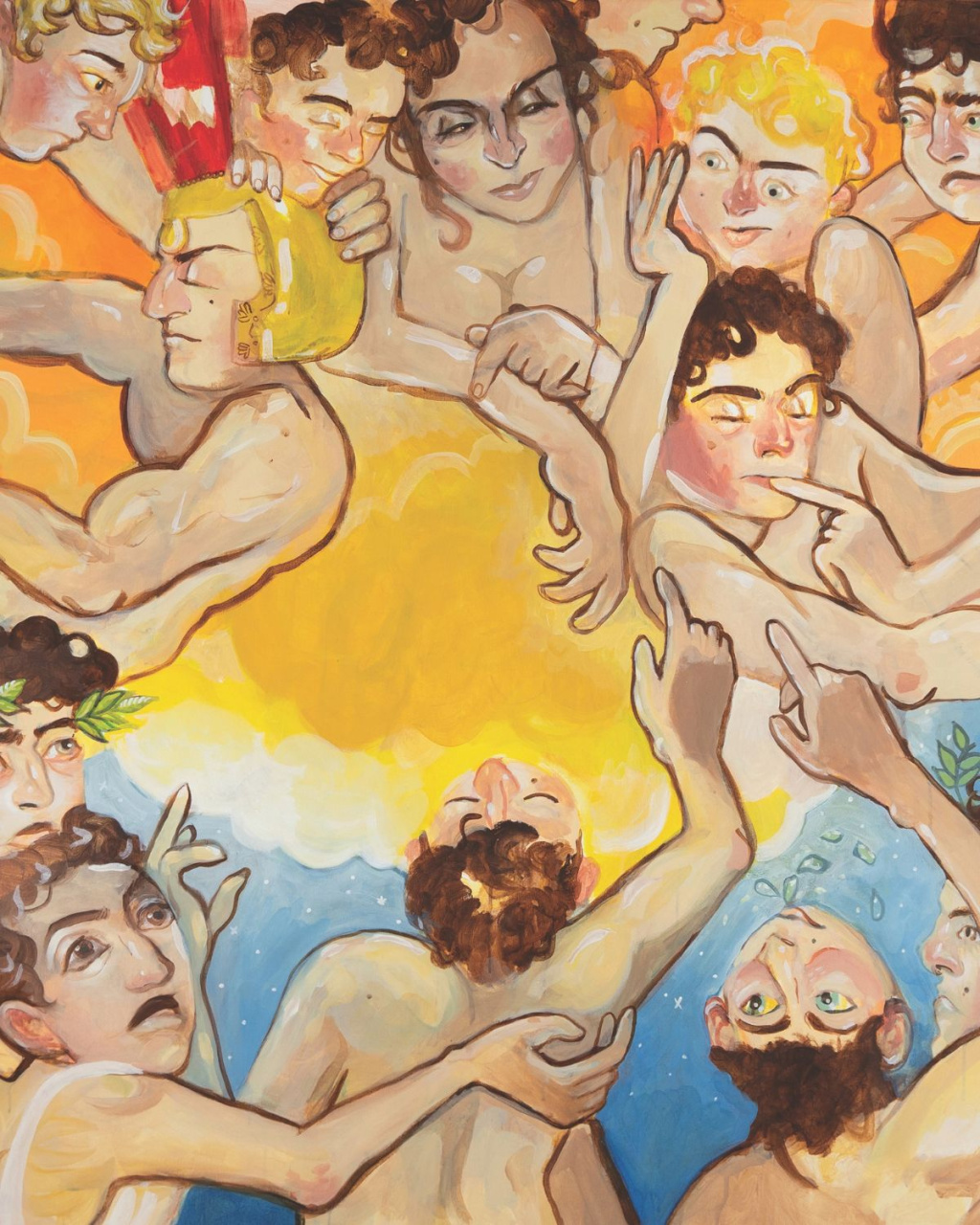
Everything starts out in the sketchbook for me, this is really my spellbook. From there I decide how I can make the work come to life. I work with strong figures, bold colour, and ornamental detail, but there’s always tension beneath the surface. Whether it’s a painting, tapestry, or architectural intervention, it’s about creating atmosphere and narrative.
How did your collaboration with 25hours begin?
I was contacted by BWM Designers & Architects who were working on 25hours Hotel at MuseumsQuartier Vienna. They had seen frescos that I created for a private palatial home. For me it was an instant yes, because there is a shared interest in storytelling, character, and creating spaces that don’t feel anonymous. I created large-scale murals, painted architectural elements, trompe l’oeil selfie moments in the elevators, and site-specific frescos that become part of the hotel’s daily life rather than decoration. The work is integrated into circulation spaces – elevators, and communal areas, so guests encounter it unexpectedly. It’s about adding narrative texture to the building, something that reveals itself over time. I thought, what if this 25hours was an old baroque theatre that was in-between the present and the past. It’s also a bit of a love note to Vienna.
Rather than murals I like to think of them as baroque graffiti! My favourite thing is when I see that people do their little selfie moments in the elevator when they’re all dressed up to go out. I wanted to create a five to 20 second little world, where it’s just like you’re on stage. It’s about capturing a moment that’s unmistakably 25hours, unmistakably Spencer, and unmistakably Vienna.
What’s next for you?
I have my first solo show at Art Absolument in Paris from April 29 to June 9, 2026. I’m also expanding into functional art objects that live between sculpture and design. I’m trying to take art off the canvas or sketchbook and put out in the real world. Making brooches is an obsession of mine and I’m also working with a company on a tarot deck.
Where should visitors explore in Vienna?
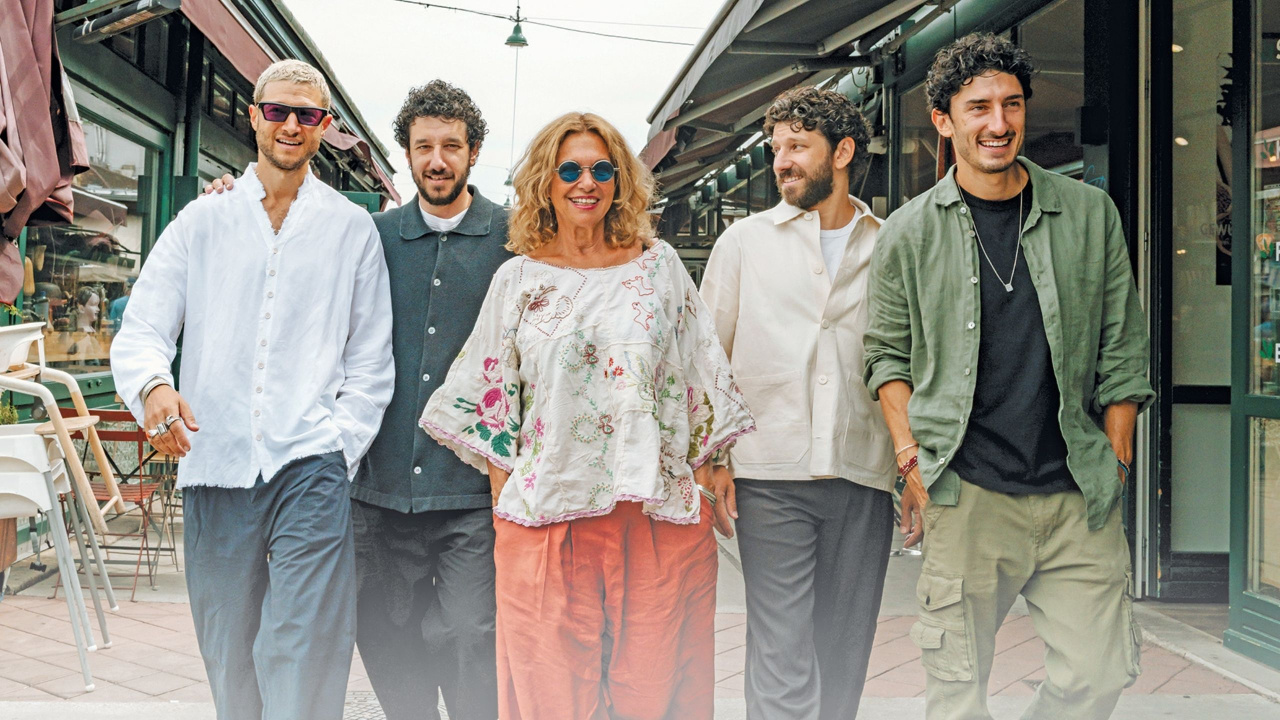
Wienzeilenhauser are a must. These famous residential buildings designed by Otto Wagner – near the Naschmarkt – were built between 1898 and 1899 and are masterpieces of Viennese Secession style and high Art Nouveau, covered in flowers. Otto Wagner’s subway stations are spectacular, specifically Karlsplatz with its green and gold sunflower motifs. And then there’s also a lot of lost spaces in Vienna that I really love such as decrepit, old places that lie behind the curtain – the café houses that still have the cigarette-stained ceilings with beautiful patinas. Seek them out!